Stem Cells for Arthritic Joints: Potential, Evidence, and Limitations
Patients exploring advanced medical options frequently encounter conflicting claims regarding stem cell therapy for joint degeneration. Establishing a clear, evidence-based understanding from the outset is essential for making informed healthcare decisions. Currently, stem cell therapy for osteoarthritis remains an investigational medical option. Clinical data suggests that these treatments may significantly improve chronic pain and restore physical function in some carefully selected patients. These symptomatic improvements are particularly notable for individuals suffering from degenerative knee conditions. However, reputable longevity physicians must clarify that reliable cartilage restoration and complete long-term disease modification have not been definitively proven in large-scale human trials.
Patients traveling to elite medical destinations like Bangkok require absolute transparency regarding what cellular medicine can and cannot achieve. Rather than viewing cellular therapies as guaranteed structural cures, the most responsible medical consensus positions them as sophisticated biological interventions designed to modulate inflammation and support a healthier joint environment. Understanding the specific capabilities of these treatments allows patients to align their clinical expectations with current scientific reality.
Evidence Is Strongest for Knee Osteoarthritis
Osteoarthritis can affect any joint in the human body, but the vast majority of cellular medicine research focuses exclusively on the knee. The knee joint provides a large, accessible synovial capsule, making it the primary target for early clinical trials and standardized imaging studies. Patients should be aware that the evidence supporting treatment for the hip, hand, shoulder, and other joints is substantially more limited. The anatomical structures, biomechanical loads, and vascular supply of these smaller or deeper joints differ significantly from the knee. Consequently, one cannot simply assume that the clinical outcomes observed in knee osteoarthritis trials will automatically translate to these other anatomical areas.
Effects on Pain and Joint Function
The most consistently reported benefits of cellular injections revolve around symptom management. A variety of randomized controlled trials and comprehensive systematic reviews evaluate patient outcomes using standardized metrics. These include the Visual Analog Scale (VAS) for pain intensity and the Western Ontario and McMaster Universities Osteoarthritis Index (WOMAC) for physical function and joint stiffness. In many of these controlled studies, patients report notable reductions in daily pain and an increased ability to perform weight-bearing activities.
It is necessary to distinguish statistically significant improvements observed in a laboratory database from clinically meaningful benefits experienced by a patient. While data might show a statistical reduction in pain scores compared to a baseline, the practical improvement in a patient's daily quality of life determines the true success of the intervention. When evaluating these studies, medical professionals look closely at the treatment duration, the specific comparator group (such as placebo saline injections or hyaluronic acid), the overall sample size, and the certainty of the evidence. Some trials demonstrate that symptomatic relief can last anywhere from six to twelve months, but patients frequently require comprehensive rehabilitation protocols to maximize and sustain these functional gains.
Cartilage Repair and Disease Modification
The concept of regrowing lost tissue remains the most highly debated aspect of regenerative orthopedics. Evaluating structural outcomes requires separating imaging data from symptomatic relief. A patient may experience a complete resolution of joint pain, but this does not inherently indicate that new cartilage has formed. Researchers rely on advanced imaging techniques, including high-resolution MRI, to measure cartilage volume, map specific tissue layers, and assess joint-space narrowing over time.
Current radiological evidence presents a mixed perspective. Some localized studies report a slowing of cartilage degradation or minor increases in cartilage volume following intervention. Other comprehensive trials show no discernible structural changes on follow-up MRIs despite profound symptom improvement. An improved imaging marker or a reduction in bone marrow lesions does not confirm complete cartilage regrowth or the permanent reversal of osteoarthritis. Patients should approach cellular medicine as a tool to manage the biological environment of the joint rather than an architectural replacement strategy.
How Mesenchymal Stem Cells May Affect an Arthritic Joint
Understanding the physiological mechanism of action helps demystify the entire therapeutic process. Historically, the medical community theorized that injected cells would attach directly to damaged bone and physically transition into new cartilage tissue. Modern research has largely shifted away from this simplistic replacement model. Instead, scientists now recognize that Bone marrow-derived MSC stem cell therapy operates primarily through sophisticated paracrine and immunomodulatory mechanisms.
When mesenchymal stem cells are introduced into an osteoarthritic joint, they encounter a highly inflamed, acidic environment. Rather than permanently engrafting into the existing tissue, these cells function as intelligent biological signaling centers. They secrete a vast array of trophic factors, cytokines, and protective exosomes directly into the synovial fluid. This complex molecular communication actively suppresses localized inflammation and disrupts the catabolic enzymes that rapidly degrade existing cartilage.
By modulating the immune response within the joint capsule, MSCs encourage the body's resident cells to shift from a state of chronic degradation toward a state of active maintenance. This paracrine signaling can stimulate local chondrocytes, promote the formation of healthier synovial fluid, and reduce the sensitivity of local nerve endings. Medical professionals avoid suggesting that the injected cells permanently remain inside the joint or physically rebuild the articular surface, focusing instead on this profound ability to orchestrate the local tissue response.
Why Study Results Vary Between Stem Cell Treatments
A major source of confusion for international patients is the vast discrepancy in reported success rates across different clinics. It is imperative to understand that "stem cell therapy" is not one single, standardized medical intervention. The term encompasses a massive variety of biological products, harvesting techniques, and delivery methods. Consequently, clinical findings supporting one specific cell product or medical protocol cannot be automatically applied to another.
Cell Source, Processing, and Dose
The biological characteristics of the treatment are defined long before the injection occurs. The source of the tissue plays a primary role. Cells can be harvested from bone marrow, adipose (fat) tissue, or perinatal sources such as umbilical cord tissue. Furthermore, treatments are categorized by whether they use autologous cells (harvested directly from the patient) or allogeneic cells (sourced from a rigorously screened healthy donor).
Laboratory processing variables drastically impact the final therapeutic product. Factors include whether the cells undergo specialized culture expansion, the specific passage number during cultivation, the final administered dose, and the post-thaw viability of the cellular batch. Elite international facilities prioritize standardized manufacturing. While European Union Good Manufacturing Practice (EU-GMP) manufacturing and stringent batch testing firmly establish product consistency, purity, and identity, these pharmaceutical standards do not independently prove clinical effectiveness for osteoarthritis. They do, however, guarantee that the physician is administering an uncontaminated, highly viable cellular product exactly as prescribed.
Patient Selection and Injection Protocol
Even with the highest quality cellular product, the clinical outcome depends heavily on the individual patient and the precision of the delivery. Baseline osteoarthritis severity significantly influences success. A patient with mild to moderate joint space narrowing generally responds better than a patient with complete bone-on-bone degeneration. Other critical variables include overall joint alignment, the level of active inflammatory disease, patient age, body weight, and any previous surgical interventions.
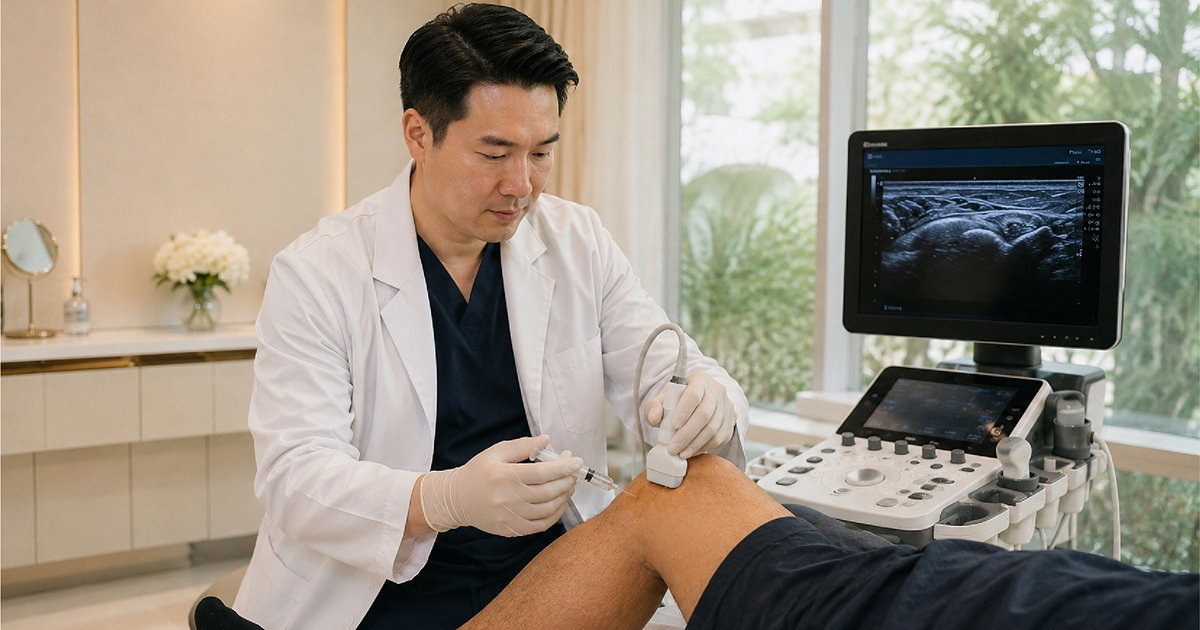
The mechanical delivery of the cellular product requires absolute precision. Blind injections, performed solely by anatomical feel, carry a high risk of missing the intended synovial capsule entirely. Health Passport utilizes Live Ultrasound Guidance to identify the joint space in real time. This advanced imaging ensures targeted precision, guaranteeing that the specialized cells are delivered exactly into the damaged area rather than dissipating into surrounding muscle or fat. A comprehensive protocol also includes structured post-injection rehabilitation and extended follow-up duration to evaluate functional milestones accurately. Patients seeking this level of exactitude can explore an ultrasound-guided local stem cell injection designed to maximize targeted delivery.
Important Limitations of the Current Evidence
A balanced medical perspective requires acknowledging the limitations of current orthopedic research. Many published studies feature small patient populations, making it difficult to draw broad, definitive conclusions applicable to the general public. As discussed, the vast inconsistencies in cellular preparations, dosage protocols, and control groups make direct comparisons between trials nearly impossible. Many studies also feature relatively short follow-up periods, leaving the long-term durability of these treatments an open question in the medical literature.
There is also the potential for publication bias, where successful trials are published enthusiastically while trials showing no benefit remain unpublished. Due to these compounding factors and limited large-scale replication, major medical organizations remain highly cautious. The American College of Rheumatology and the Arthritis Foundation currently recommend against stem cell injections for knee and hip osteoarthritis, specifically noting that the cellular preparations and injection techniques lack widespread clinical standardization.
Safety and Cell Quality Require Separate Evaluation
When evaluating a prospective therapy, patients must separate general procedural safety from the specific quality of the cellular product. The tolerability reported in highly controlled academic studies does not establish a guarantee of universal safety across all commercial products and private providers.
Procedure-related risks involve the physical act of the injection itself, such as temporary swelling, joint stiffness, or localized discomfort. Utilizing advanced imaging heavily mitigates these risks. The integration of live ultrasound guidance allows the attending physician to navigate the needle with absolute precision, avoiding vital nerves and blood vessels. This real-time visualization directly minimizes procedure-related tissue trauma and heavily reduces the risk of adverse side effects during the administration process.
Conversely, risks associated with the cellular product require entirely different safeguards. These include the rigorous evaluation of cell sourcing, laboratory manufacturing standards, cryogenic storage integrity, cold-chain transport, and the prevention of bacterial contamination. A premium clinical facility provides absolute transparency regarding these variables, utilizing independent Certificates of Analysis to verify the sterility and viability of every cellular batch before it ever enters the treatment room.
Frequently Asked Questions About Stem Cell Therapy for Osteoarthritis
To provide additional clarity for our international clientele, we have addressed several common inquiries regarding the luxury patient experience and the scientific foundations of our cellular protocols.
How does Health Passport ensure the sterility and viability of the cellular products used in joint therapies?
The foundation of a safe cellular protocol is an uncompromising manufacturing standard. Health Passport utilizes cells cultured in an EU-GMP Grade A/B pharmaceutical facility. This European designation represents the highest global standard for sterile medicinal production, featuring continuous environmental monitoring to prevent particulate and microbial contamination. Furthermore, our clinical protocols utilize an animal-component-free manufacturing process. By avoiding fetal bovine serum and other animal-derived growth factors, we significantly lower the risk of immunological reactions. Every cellular batch is accompanied by an independent Certificate of Analysis verified by a Qualified Person, providing our patients with complete, documented assurance of the product's identity, purity, and post-thaw viability.
What is the luxury patient experience like for an international medical tourist visiting Bangkok for this procedure?
We believe that pursuing advanced longevity medicine should be a restorative, stress-free endeavor. The Health Passport experience is designed to provide complete privacy and comfort for high-net-worth individuals and traveling executives. The journey begins with a comprehensive virtual consultation with our longevity physicians prior to your departure. Upon your arrival in Thailand, our dedicated concierge team manages every logistical detail, from VIP airport transfers and fast-track immigration to coordination with luxury hotel partners. Clinical treatments are conducted in a private, deeply comfortable medical sanctuary. Patients receive dedicated attention from our nursing staff, complementary intravenous nutritional support, and a highly personalized schedule that allows for uninterrupted rest and recovery in one of the world's premier medical tourism destinations.
Can cellular therapy replace the need for an eventual total knee arthroplasty (knee replacement)?
Our medical team is extremely careful not to position cellular medicine as a guaranteed alternative to necessary surgical intervention. For patients with severe, end-stage osteoarthritis characterized by complete cartilage loss and severe mechanical deformity, total joint arthroplasty remains the definitive standard of care. Cellular therapy is most appropriately utilized as a sophisticated disease-modifying intervention for mild to moderate degeneration. In these carefully selected cases, the immunomodulatory and paracrine effects of the cells can significantly reduce chronic pain, improve joint mobility, and potentially delay the timeline for surgical replacement. A comprehensive baseline evaluation, including an expert review of recent radiographic imaging, allows our physicians to provide a candid, evidence-based recommendation tailored precisely to your current anatomical condition.

.png)
Turn Insight Into Action
The knowledge you've gained today is only the beginning.
Explore our physician-led programs and discover a personalized path
toward better health, greater vitality and lasting longevity.
The knowledge you've gained today is only the beginning. Explore our physician-led programs and discover a personalized path toward better health, greater vitality and lasting longevity.

Local Stem Cell Experience
A focused 1-day ultrasound-guided Local Stem Cell Injection delivering 30 million cells with millimeter precision to a single target site. Includes VIP hotel transfer, Fast Track immigration, unlimited IV therapy, plus complimentary Advanced PRP and BPC-157 peptide recovery support.
361,250 THB / ~10,625 USD
425,000 THB / ~12,500 USD
.avif)
Longevity Vitality Program
A 100-million-cell premium Stem Cell IV infusion with DFPP advanced blood detox, Placenta therapy, Hyperbaric Oxygen Therapy and Unlimited premium NAD+ IV, complemented by a four-night stay at your choice of Dusit Thani, The Ritz-Carlton or Grande Centre Point Terminal 21.
1,676,200 THB / ~49,300 USD
1,972,000 THB / ~58,000 USD
.avif)
An integrative executive health screening combining comprehensive diagnostics, CT scanning and unlimited IV therapy, paired with a two-night stay at Anantara Riverside Bangkok Resort. A data-driven foundation for every regenerative wellness journey.
274,550 THB / ~8,075 USD
323,000 THB / ~9,500 USD
.avif)
A 5-day precision healthspan experience decoding your genetics, epigenetics and microbiome, paired with 10 sessions of Hyperbaric Oxygen Therapy and EECP cardiovascular rejuvenation, 3-month hormone replacement and Unlimited IV.
722,500 THB / ~21,250 USD
850,000 THB / ~25,000 USD

Begin Your Journey to Lasting Vitality
Complete the confidential enquiry form and a dedicated concierge will
personally assist in tailoring your journey, discreetly and without obligation.
Complete the confidential enquiry form and a dedicated concierge will personally assist in tailoring your journey, discreetly and without obligation.
A dedicated Health Passport concierge will be in touch shortly to guide you through the next steps.