Stem Cell Contraindications: Who Is NOT an Eligible Candidate for Regenerative Packages

Eligibility for regenerative medicine is never guaranteed. Even the most advanced clinics in the world rely on rigorous medical screening to determine if a patient is suitable for treatment. Before scheduling a procedure, clinical specialists must evaluate your current health status, comprehensive medical history, and specific treatment objectives.
While stem cell therapy in Bangkok attracts individuals seeking premium regenerative care, patient safety remains the highest priority. Active infections, certain oncology histories, and unstable chronic conditions can prevent a patient from receiving treatment or require the procedure to be temporarily deferred. A responsible clinic will always prioritize medical suitability over the desire to proceed with an elective package.
Inclusion Criteria for Stem Cell Therapy
Identifying a potential candidate requires a comprehensive clinical evaluation. Physicians look for specific factors that indicate a patient might respond well to regenerative protocols. A primary consideration is establishing a clear clinical objective. The medical team needs to know exactly what the patient hopes to achieve.
The underlying health condition must also be something that can reasonably be evaluated within the scope of regenerative medicine. While how mesenchymal stem cells work involves complex mechanisms like paracrine signaling and immunomodulation, these biological processes are not a universal solution for every ailment.
Furthermore, patients must demonstrate stable general health. They need the physical resilience to undergo the required medical assessments and the subsequent procedure. Eligibility is determined on an entirely individual basis. Age alone or a strong interest in the treatment is never sufficient to bypass the necessary medical protocols.
Medical Conditions That Can Exclude or Delay Treatment
The decision to proceed with regenerative medicine is heavily influenced by a patient's medical background. Physicians may decline treatment, postpone the procedure, or mandate further specialist evaluation if certain health circumstances are present. It is important to distinguish between temporary contraindications and more significant barriers to care.
Active Infection or Acute Illness
Patients experiencing an active infection must delay their regenerative treatments. A common cold, flu like symptoms, or an ongoing course of antibiotics for a bacterial infection will require the procedure to be postponed.
Introducing exogenous biological material into a body already fighting off a pathogen is not clinically sound. The immune system is already highly active and focused on clearing the infection. Adding stem cells during this time could interfere with the body's natural defense mechanisms or reduce the potential efficacy of the regenerative treatment. This postponement allows the physician to reassess eligibility once the acute condition has fully resolved and the patient has returned to their baseline health.
Certain Cancers and Oncological Concerns
A current or previous cancer diagnosis mandates exceptionally careful physician assessment. Certain types of cancer, or a recent history of active malignancy, can significantly affect eligibility for an elective regenerative package.
It is important to avoid a universal rule stating that all cancer survivors are permanently excluded. The specific type of cancer, the current treatment status, the time elapsed since remission, and the detailed medical history all play a role in the decision making process. Input from an oncology specialist is frequently required to determine if the regenerative protocol poses any risk of stimulating residual malignant cells. Safety dictates that any ambiguity regarding cancer status must be resolved before proceeding.
Unstable Medical Conditions
Patients presenting with unstable health conditions must be medically evaluated and stabilized prior to considering any elective stem cell procedure. This applies to poorly controlled diabetes, severe cardiovascular instability, or active autoimmune flare ups.
The focus here is entirely on clinical stability and the physician's professional judgment. An unstable physiological environment is not conducive to optimal cellular function or tissue regeneration. The body must be in a relatively balanced state to support the complex biological activities initiated by mesenchymal stem cells. Creating unsupported, disease specific lists of contraindications is less useful than evaluating the individual patient's immediate clinical stability.
Temporary Contraindications and When Re-Evaluation May Be Possible
It is vital to understand that some exclusion criteria do not mean a patient is permanently ruled out. Often, the treatment is simply deferred.
A physician may request that a patient fully recover from a recent acute illness before scheduling the procedure. Similarly, if a chronic condition is currently unstable, the medical team may recommend a period of stabilization under the care of a primary physician. In other instances, the medical team might require additional diagnostic testing or formal medical clearance from a specialist before they can reconsider the patient's eligibility. The goal is to ensure the body is optimally prepared to receive the therapy.
What Physicians Review Before Confirming Eligibility
The practical screening process is thorough and multi faceted. Before any treatment is confirmed, Health Passport physicians conduct a detailed review of the patient's comprehensive medical history.
This assessment includes a careful examination of current health status, a complete list of daily medications, and a review of all previous medical treatments or surgeries. The physician will also discuss the patient's specific treatment goals to ensure they align with what regenerative medicine can realistically offer.
Relevant laboratory results are analyzed to check organ function and rule out underlying issues. When clinically appropriate, imaging studies like MRIs or X rays are reviewed to assess structural damage or disease progression. A pretreatment physician consultation and baseline assessment are mandatory components of the planning process for all stem cell therapy programs.
Stem Cell Safety in Bangkok Includes Patient Screening and Cell Quality
Stem cell safety encompasses two entirely separate but equally important considerations. First, the medical team must determine if the patient is medically appropriate for the treatment based on the screening criteria discussed above. Second, the cellular product itself must meet exceptionally high, documented quality standards.
The stem cell therapy regulations in Thailand and international EU GMP safety standards demand rigorous quality checks. These include comprehensive donor screening protocols to prevent the transmission of infectious diseases.
Furthermore, sterility testing is conducted to ensure the final product is free from bacterial or fungal contamination. The laboratory must verify the MSC identity, confirming that the cells are indeed mesenchymal stem cells. High cell viability is critical, meaning a high percentage of the cells are alive and active. Genetic stability testing ensures the cells have not mutated during the culturing process. Finally, strict traceability and batch specific Certificate of Analysis documentation provide a transparent record of the cells' origin and quality. While manufacturing quality is paramount, it is not presented as a guarantee of a specific clinical outcome.
What Happens When a Patient Does Not Meet the Eligibility Criteria
If a patient does not meet the necessary eligibility criteria, the medical team has several options. The most common outcome is postponing the procedure until a temporary issue, like an infection, resolves.
In other cases, the physician may request further investigations to clarify a medical ambiguity. They might recommend specific interventions to stabilize an existing condition before reconsidering the treatment. If the risk benefit assessment clearly does not support proceeding, the physician will advise against the stem cell treatment entirely. This exclusion is a hallmark of responsible clinical decision making. It should be viewed as a protective measure, not as a failure to qualify for a premium package.
Confirm Your Eligibility Before Planning Treatment in Bangkok
International patients seeking premium regenerative care should always begin the process with a formal physician consultation before arranging any travel. This initial step is critical for ensuring a safe and productive medical journey.
The consultation provides the necessary platform to review the patient's detailed medical history, discuss their specific treatment goals, and analyze any relevant medical records. It is during this time that potential contraindications are identified and addressed. The physician will determine if further diagnostic testing is required before a personalized treatment plan can be developed. To begin this essential screening process, speak with the Health Passport team today.

Turn Insight Into Action
The knowledge you've gained today is only the beginning.
Explore our physician-led programs and discover a personalized path
toward better health, greater vitality and lasting longevity.
The knowledge you've gained today is only the beginning. Explore our physician-led programs and discover a personalized path toward better health, greater vitality and lasting longevity.

Local Stem Cell Experience
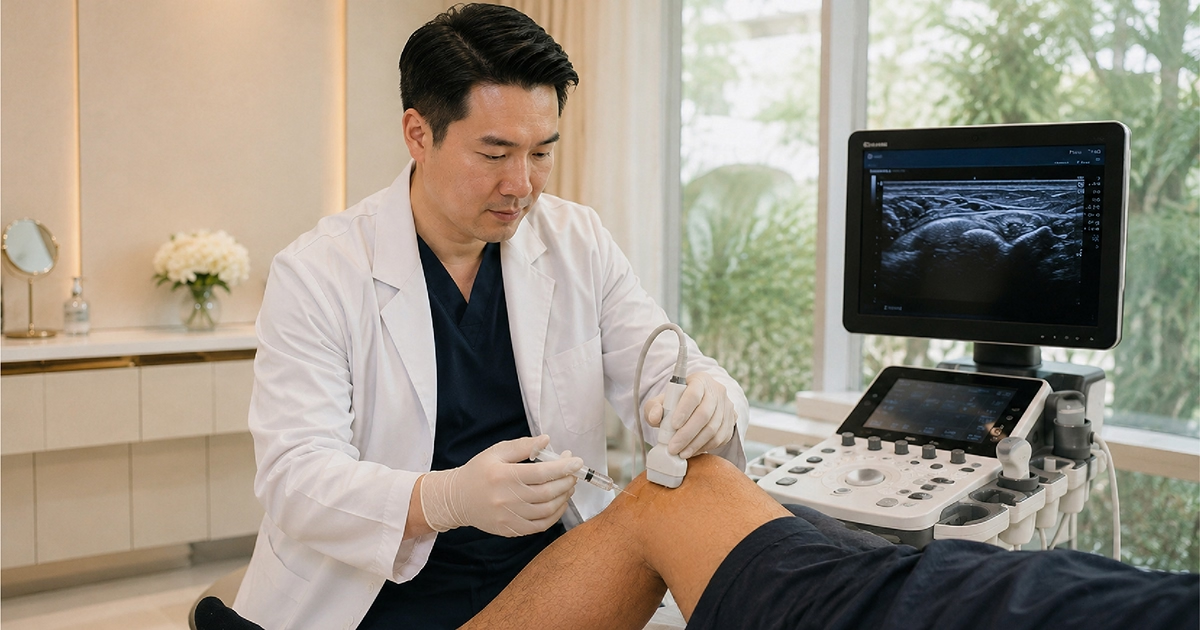
A focused 1-day ultrasound-guided Local Stem Cell Injection delivering 30 million cells with millimeter precision to a single target site. Includes VIP hotel transfer, Fast Track immigration, unlimited IV therapy, plus complimentary Advanced PRP and BPC-157 peptide recovery support.
361,250 THB / ~10,625 USD
425,000 THB / ~12,500 USD

Longevity Vitality Program
A 100-million-cell premium Stem Cell IV infusion with DFPP advanced blood detox, Placenta therapy, Hyperbaric Oxygen Therapy and Unlimited premium NAD+ IV, complemented by a four-night stay at your choice of Dusit Thani, The Ritz-Carlton or Grande Centre Point Terminal 21.
1,676,200 THB / ~49,300 USD
1,972,000 THB / ~58,000 USD

An integrative executive health screening combining comprehensive diagnostics, CT scanning and unlimited IV therapy, paired with a two-night stay at Anantara Riverside Bangkok Resort. A data-driven foundation for every regenerative wellness journey.
274,550 THB / ~8,075 USD
323,000 THB / ~9,500 USD

A 5-day precision healthspan experience decoding your genetics, epigenetics and microbiome, paired with 10 sessions of Hyperbaric Oxygen Therapy and EECP cardiovascular rejuvenation, 3-month hormone replacement and Unlimited IV.
722,500 THB / ~21,250 USD
850,000 THB / ~25,000 USD

Begin Your Journey to Lasting Vitality
Complete the confidential enquiry form and a dedicated concierge will
personally assist in tailoring your journey, discreetly and without obligation.
Complete the confidential enquiry form and a dedicated concierge will personally assist in tailoring your journey, discreetly and without obligation.
A dedicated Health Passport concierge will be in touch shortly to guide you through the next steps.