Preventing Joint Replacement: What High-Impact Athletes and Golfers Expect from Cartilage Packages

For high-net-worth individuals and competitive athletes facing chronic joint pain, preserving mobility is a top priority. A stem cell joint injection package may be considered as a joint-preserving option for selected patients seeking better function and symptom control, but it cannot guarantee that joint replacement will be avoided. It is important to separate symptom improvement, cartilage changes, and delaying surgery from the beginning so expectations remain clinically realistic. Current evidence suggests potential benefit in selected knee osteoarthritis patients, while certainty and long-term comparative evidence remain limited. High-performing individuals who explore stem cell therapy in Bangkok often seek transparent, evidence-based approaches to their orthopedic health.
What a Stem Cell Joint Injection Package Is Designed to Do
Localized regenerative treatment focuses on a clearly identified joint or musculoskeletal structure rather than providing a general whole-body treatment. This targeted approach allows the physician to concentrate therapeutic efforts directly where mechanical wear or injury has occurred. The treatment plan should begin with a comprehensive physician assessment of the affected area, specific symptoms, imaging findings, previous treatment history, and the patient's long-term activity goals.
Health Passport currently describes its local program as a physician-led treatment using real-time ultrasound guidance for a defined anatomical target. This ensures that the delivery of cellular therapies is meticulously planned and executed. Patients opting for a Local Stem Cell Experience are provided with a structured medical pathway that prioritizes accuracy and clinical safety.
Three Outcomes Athletes Should Separate Before Treatment
Patients often combine pain relief, cartilage repair, and avoiding surgery into one expectation even though these are different clinical outcomes. Understanding these distinctions helps executives and professional athletes set practical timelines for their recovery. Each outcome should be evaluated separately when deciding whether regenerative treatment fits the athlete's specific joint condition and performance goals.
Pain, Mobility and Joint Function
The most immediate concern for active individuals is their quality of life. Medical evaluations must cover outcomes that matter in daily life and sport, including pain, stiffness, walking tolerance, joint loading, range of motion, and the ability to return progressively to activity. Reducing joint inflammation can significantly improve how a knee or shoulder feels during everyday movements. Research on mesenchymal stem cell (MSC) treatment for knee osteoarthritis has reported improvements in pain and function in some studies, although the certainty and magnitude of benefit vary across trials.
Cartilage Changes and Tissue Repair
A common misconception is that injected cells simply grow into new cartilage. MSCs are primarily studied for cellular signaling and immune modulation rather than functioning as direct replacement cartilage. Through paracrine signaling, these cells communicate with the surrounding joint environment to potentially reduce inflammatory markers and promote a healthier internal joint state. Imaging changes or biological repair signals should therefore be distinguished from claims of fully restoring damaged cartilage. Patients interested in the biological mechanisms can learn more about what mesenchymal stem cells actually do.
Delaying Joint Replacement
For many individuals with demanding schedules, buying time before a major operation is highly valuable. Postponing surgery is a possible treatment goal for selected patients rather than a predictable outcome. While the therapy aims to optimize joint health, structural limitations remain a factor. Some clinical research reports delayed progression to arthroplasty in specific osteoarthritis populations, while recent reviews also identify major evidence gaps and a lack of direct high-quality comparisons with joint replacement .
Who May Be a Candidate Before Joint Replacement Is Considered
Careful patient selection dictates the appropriateness of regenerative therapies. There are several factors a physician should assess, including the diagnosis, severity and location of cartilage damage, joint alignment, stability, imaging findings, previous treatments, symptom burden, overall health, and desired activity level. A thorough clinical evaluation ensures that only individuals with a reasonable chance of symptomatic improvement proceed with the therapy.
It is necessary to make clear that advanced structural degeneration or other mechanical problems may change the treatment strategy and can make orthopedic surgery part of the discussion. Severe bone-on-bone osteoarthritis or complete ligament tears require a different clinical approach. Patients are encouraged to review guidelines from respected bodies like the American Academy of Orthopaedic Surgeons to understand comprehensive management strategies.
Ultrasound-Guided Injection Protocol
Precision is paramount in high-end regenerative orthopedics. The clinical process moves from clinical assessment and identification of the treatment area to live ultrasound mapping, planning the exact needle path, and placing the injection into the intended joint or tissue while visualizing surrounding anatomical structures. This imaging technology allows the specialist to navigate around blood vessels and nerves safely.
Physicians must emphasize precision and anatomical targeting rather than presenting ultrasound guidance as a guarantee of treatment success. Accurate delivery simply ensures the biologic material reaches the intended environment. Health Passport specifically uses real-time ultrasound guidance for its localized treatment protocol. For a detailed look at this clinical standard, explore the mechanics of an ultrasound-guided stem cell injection.
What Recovery Looks Like for High-Impact Athletes and Golfers
Rehabilitation is a fundamental phase of any joint preservation strategy. Returning to sport should be progressive and based on symptoms, joint function, the treated structure, and direct physician guidance. Rushing back to the tennis court or golf course can compromise the cellular environment.
Doctors address temporary soreness or stiffness after a local injection and explain that high-impact athletes need to regain load tolerance over time. Joint loading must be introduced incrementally to protect the treated area. Additionally, golfers should specifically consider their rotational movement and weight transfer before returning fully to play. Engaging with a sports physiotherapist ensures that mechanics are optimized during the healing window.
How to Evaluate a Cartilage Repair Package in Bangkok
International patients traveling for premium medical care must demand strict safety and quality standards. For patients researching cartilage repair in Bangkok, package evaluation should go beyond the procedure name and include cell source, manufacturing controls, batch-specific Certificate of Analysis, identity and viability testing, sterility testing, traceability, physician assessment, and injection technique. Transparency in these laboratory protocols protects the patient from substandard preparations.
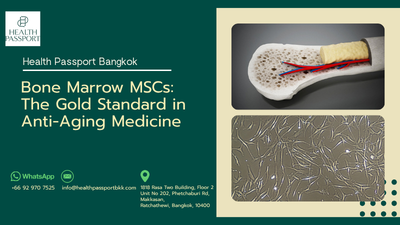
Health Passport documentation identifies its cellular product as Bone marrow-derived MSCs manufactured under strict EU GMP/PIC/S standards with thorough batch-level quality control and release testing. This luxury medical standard ensures high cell viability and pristine sterility for every patient. Discover more regarding how MSC treatment quality is verified.
Frequently Asked Questions (FAQ)
Does this therapy rebuild missing cartilage?
No medical treatment currently regenerates native hyaline cartilage to its original, uninjured state. MSCs modulate the joint's internal environment to potentially reduce inflammation and improve structural symptoms.
Is an ultrasound mandatory for joint injections?
Blind injections have a higher risk of missing the intra-articular space. Real-time ultrasound guidance allows the physician to view the exact needle path, ensuring precise delivery of the cellular product directly into the targeted joint or tendon sheath.
How long before I can resume playing golf?
Recovery timelines are highly individualized based on the specific joint treated and the severity of the initial damage. A progressive return to rotational sports is advised under strict physician and physical therapy guidance.
Start with a Joint-Specific Physician Assessment
Taking the next step requires personalized medical advice rather than relying on generalized information. We encourage athletes and golfers to review their specific diagnosis, recent imaging, previous treatments, current performance limitations, and desired return-to-sport goals with a physician before choosing a regenerative package or deciding whether joint-preserving treatment remains appropriate. Proper medical screening protects the patient's long-term health.
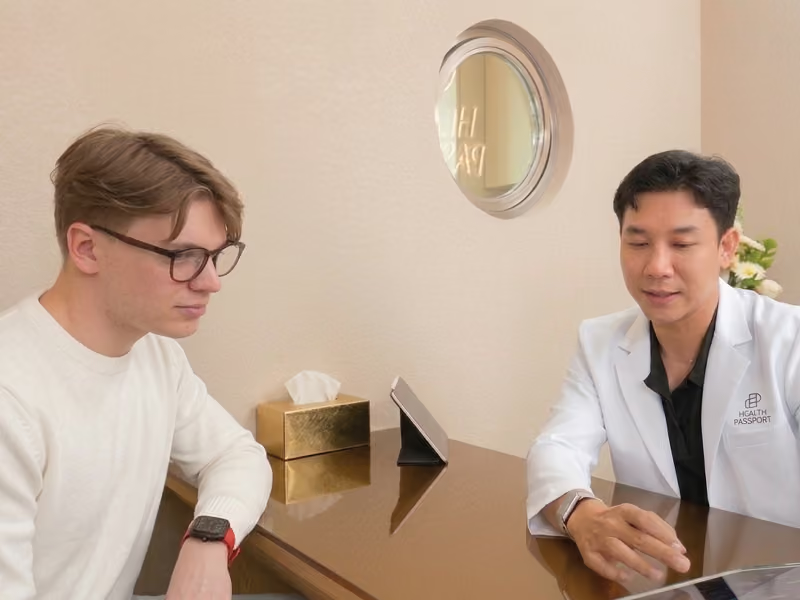
Health Passport offers a pre-arrival physician consultation for reviewing health history and treatment goals before travel
This concierge approach ensures that every international guest receives tailored clinical attention. Book your private physician consultation to explore your orthopedic options in Bangkok.

Turn Insight Into Action
The knowledge you've gained today is only the beginning.
Explore our physician-led programs and discover a personalized path
toward better health, greater vitality and lasting longevity.
The knowledge you've gained today is only the beginning. Explore our physician-led programs and discover a personalized path toward better health, greater vitality and lasting longevity.
Local Stem Cell Experience
A focused 1-day ultrasound-guided Local Stem Cell Injection delivering 30 million cells with millimeter precision to a single target site. Includes VIP hotel transfer, Fast Track immigration, unlimited IV therapy, plus complimentary Advanced PRP and BPC-157 peptide recovery support.
361,250 THB / ~10,625 USD
425,000 THB / ~12,500 USD

Longevity Vitality Program
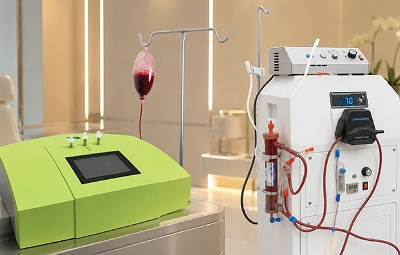
A 100-million-cell premium Stem Cell IV infusion with DFPP advanced blood detox, Placenta therapy, Hyperbaric Oxygen Therapy and Unlimited premium NAD+ IV, complemented by a four-night stay at your choice of Dusit Thani, The Ritz-Carlton or Grande Centre Point Terminal 21.
1,676,200 THB / ~49,300 USD
1,972,000 THB / ~58,000 USD

An integrative executive health screening combining comprehensive diagnostics, CT scanning and unlimited IV therapy, paired with a two-night stay at Anantara Riverside Bangkok Resort. A data-driven foundation for every regenerative wellness journey.
274,550 THB / ~8,075 USD
323,000 THB / ~9,500 USD

A 5-day precision healthspan experience decoding your genetics, epigenetics and microbiome, paired with 10 sessions of Hyperbaric Oxygen Therapy and EECP cardiovascular rejuvenation, 3-month hormone replacement and Unlimited IV.
722,500 THB / ~21,250 USD
850,000 THB / ~25,000 USD

Begin Your Journey to Lasting Vitality
Complete the confidential enquiry form and a dedicated concierge will
personally assist in tailoring your journey, discreetly and without obligation.
Complete the confidential enquiry form and a dedicated concierge will personally assist in tailoring your journey, discreetly and without obligation.
A dedicated Health Passport concierge will be in touch shortly to guide you through the next steps.